Split 3: Between Concrete and Community
People, stories & Everday life
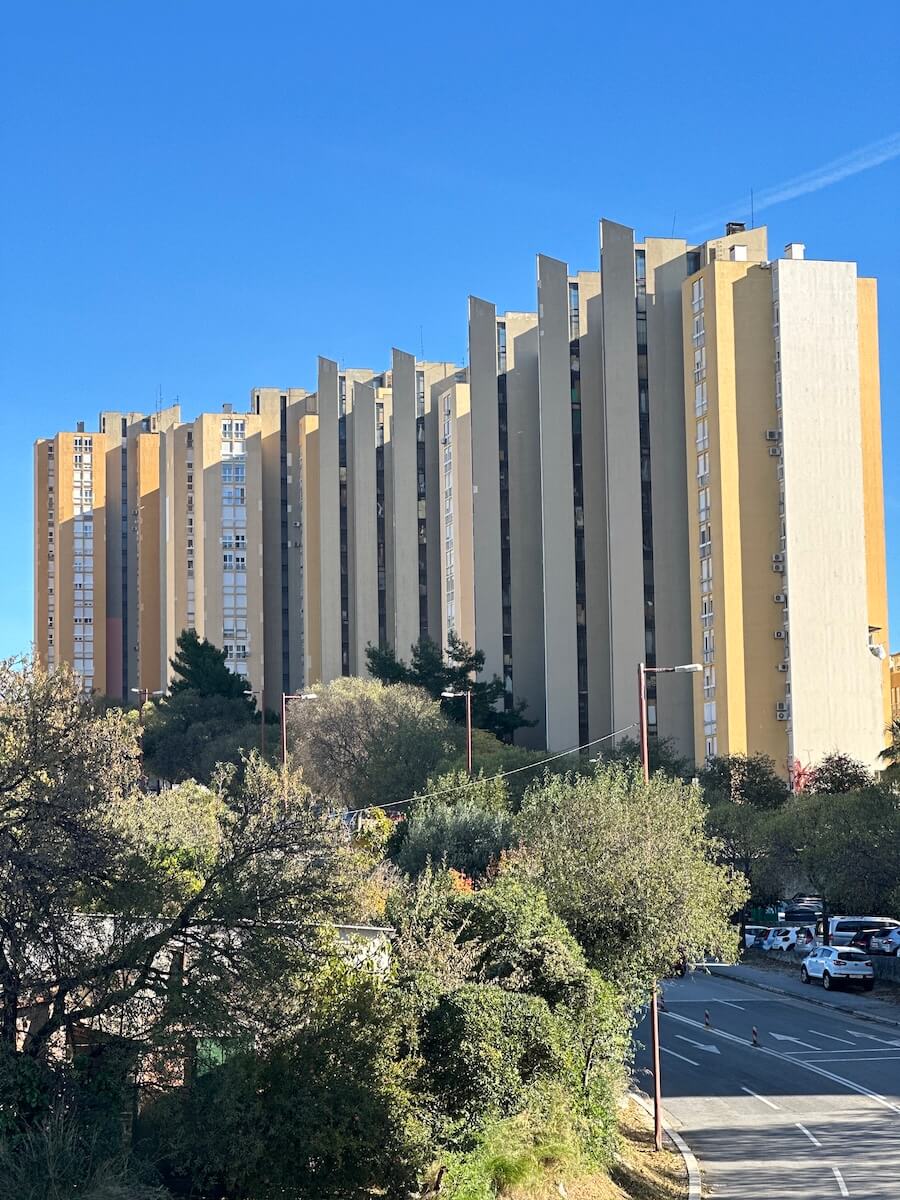
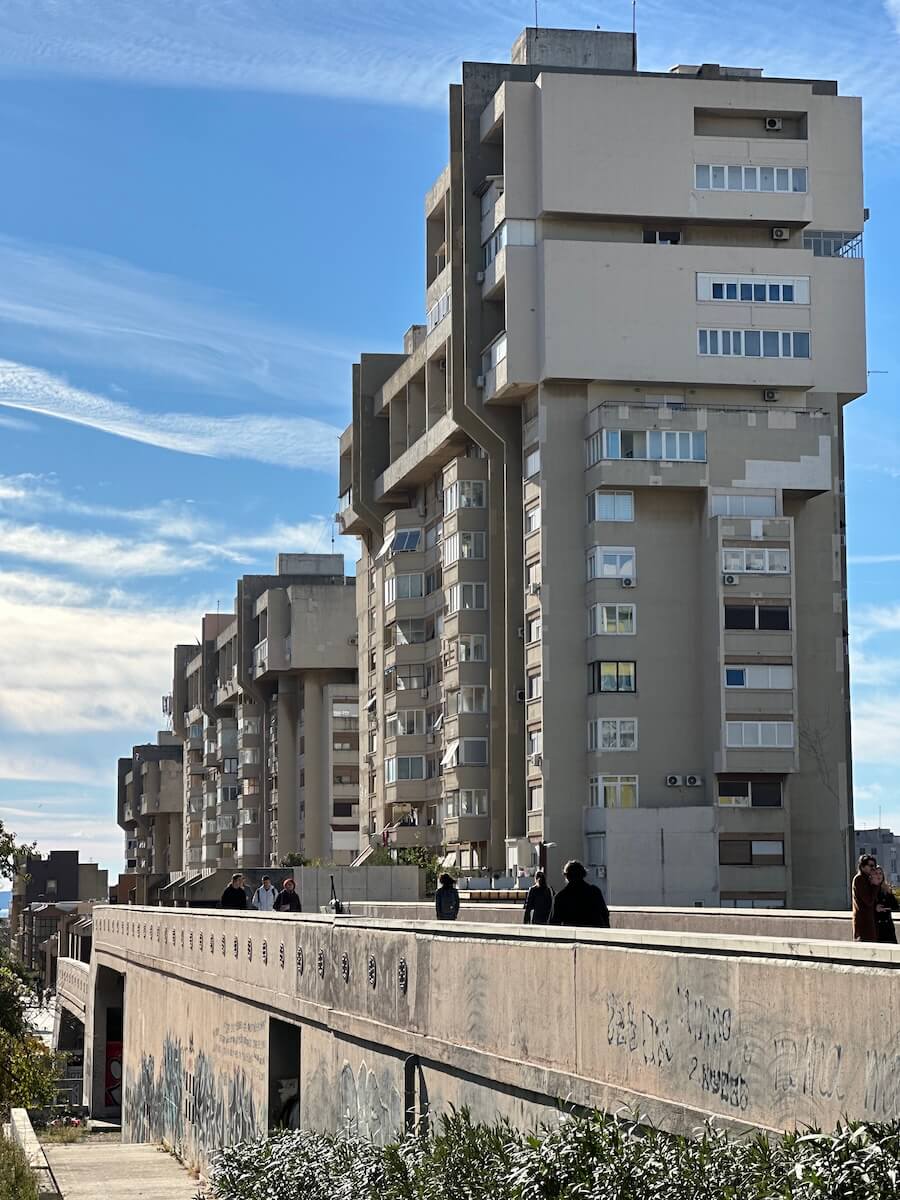
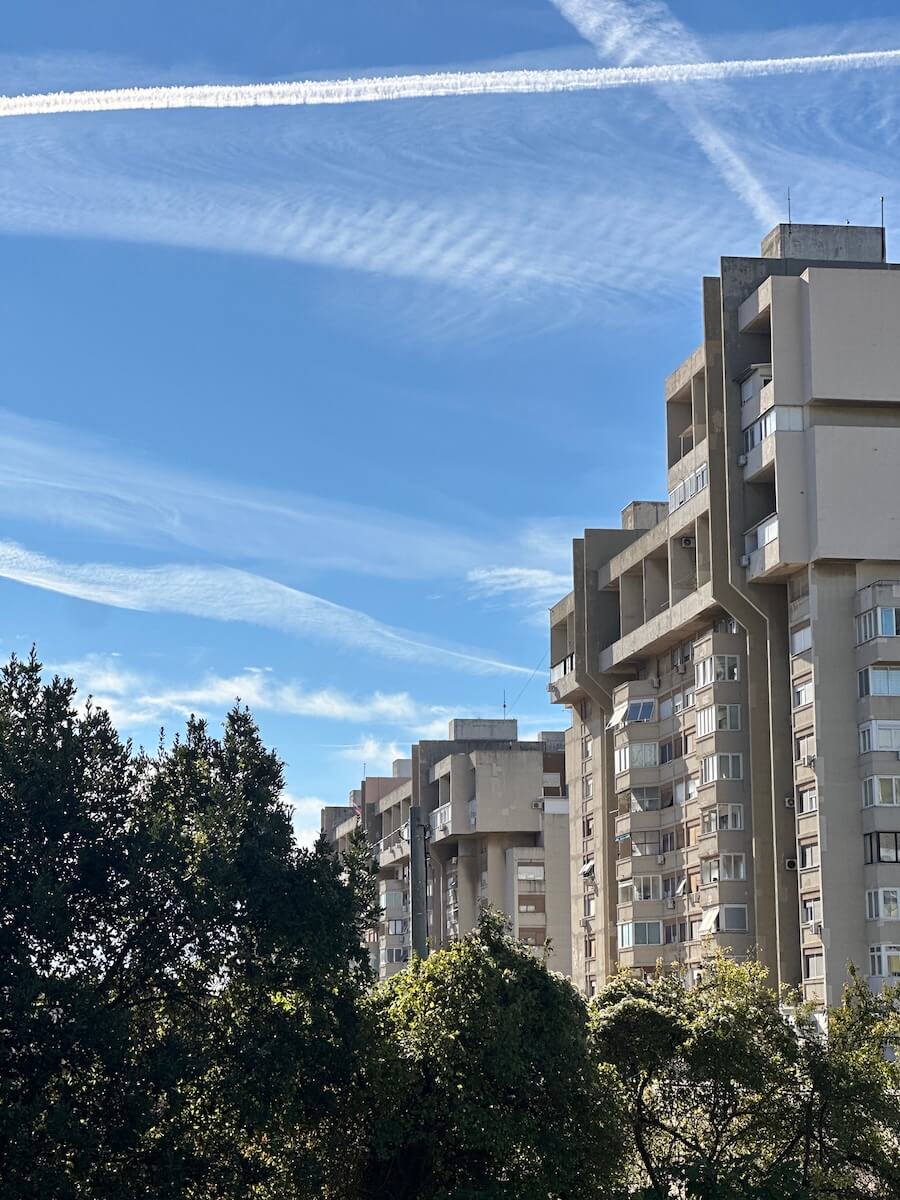
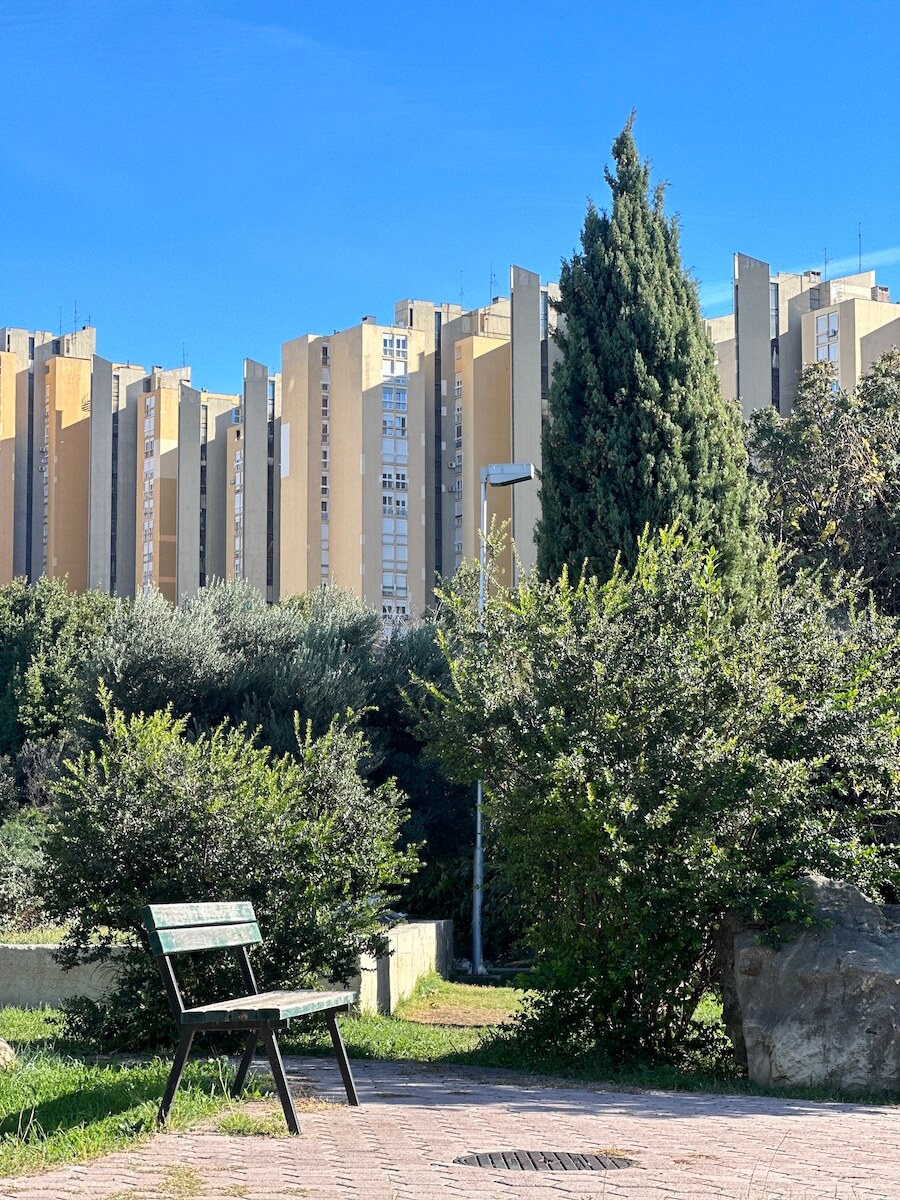
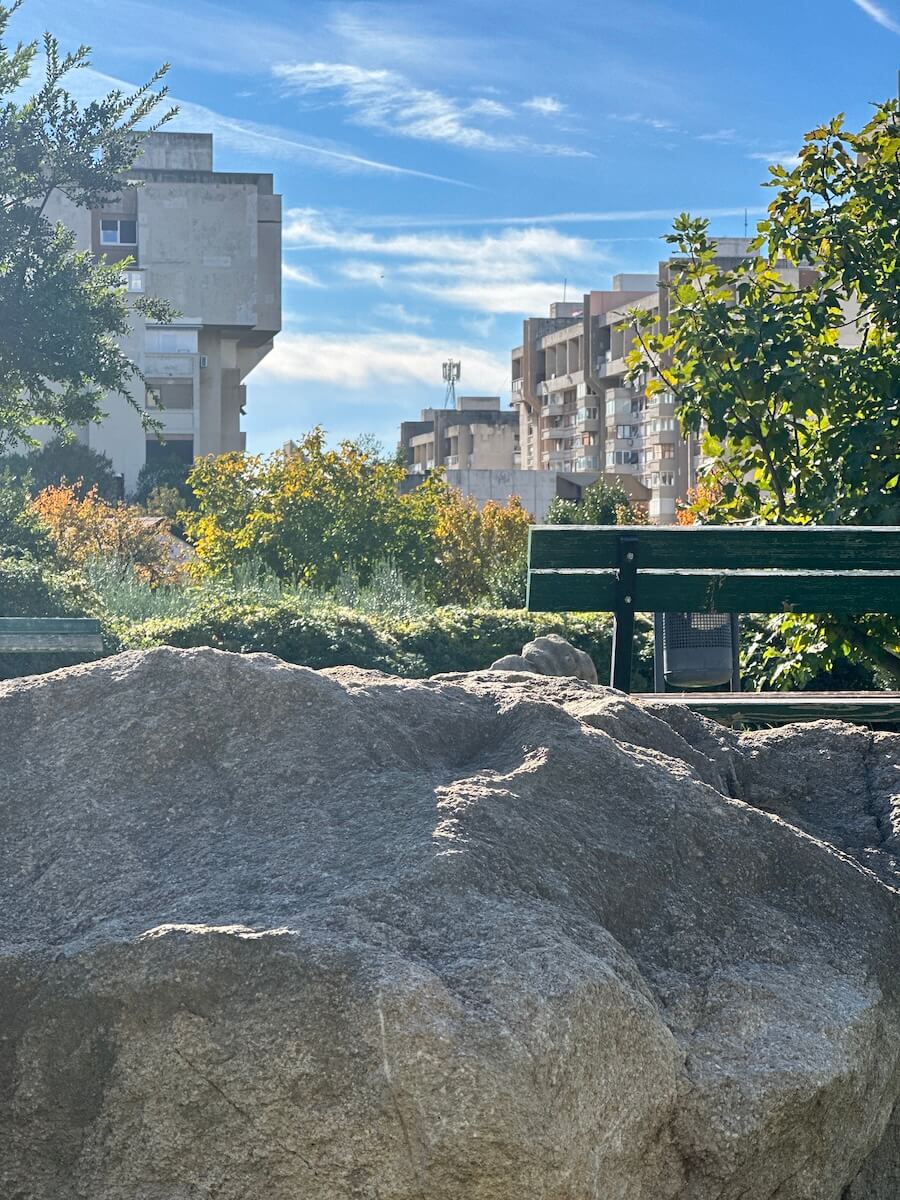
Brutalism is rarely neutral. People either admire its honesty or turn away from its weight. Designed between the 1950s and 1970s, this architectural approach favored raw materials, bold shapes, and functionality over ornament. In Split, one neighborhood embodies both the ideals and the contradictions of that era: Split 3.
Built in the 1970s during Yugoslavia’s wave of urban expansion, Split 3 was not just a residential zone. It was a city-making project. A response to rising population, industrial growth, and the social vision of self-managed socialism. It became a test ground for modernist urban planning in the Adriatic.
What sets Split 3 apart is its structure. Unlike many housing blocks of the time—repetitive, detached, and alienating—Split 3 was imagined as a living system. Architects created a network of residential units connected by pedestrian paths, open courtyards, public services, and local commerce. The human scale was not forgotten. The car was pushed aside. People could walk, meet, rest, and return home without crossing a road.
It was radical in its simplicity.
Split 3 wasn’t only built. It was curated. Architects Ante Šušteršić, Branko Silađin, and Dinko Kovačić, among others, worked as a team. Their aim was not to impose, but to respond—to the Mediterranean light, to the terrain, to the life that would unfold there. They designed with care for proportion, shade, and sequence. They didn’t just provide apartments. They shaped an environment.
This approach caught international attention. Split 3 was featured in MoMA’s exhibition Toward a Concrete Utopia: Architecture in Yugoslavia, 1948–1980, marking it as one of the most ambitious urban experiments in socialist Europe. It stood for something more than housing. It stood for a possibility: that architecture could reflect collective values, not just economic efficiency.
But architecture doesn’t age in theory. It ages in time.
Today, people live in Split 3 with mixed feelings. For some, it’s a neighborhood that works. A place with greenery, social fabric, and everyday rhythms. For others, it carries the echo of Yugoslavia’s unfinished promises. The concrete reminds them not only of vision, but of struggle.
Walking through it, one can feel both.
Split 3 is not just about buildings. It’s about decisions. About what kind of city we wanted to build, and what remains of that wish. The concrete is not just a style. It’s a record.
So the question remains:
Was Split 3 a success of architecture, or a failure of politics?
Or is it simply what it always was—an honest attempt to build life into space?
© 2025 The Storyteller Croatia - Designed and developed by KONTRA-st Digital Design